

Which Is Right for Your Organization?
As the Department of Defense continues to enforce cybersecurity standards across the defense supply chain, contractors are facing an important decision. How should they approach CMMC compliance?
Some companies try to manage everything manually. Others invest in automated platforms that monitor and maintain security controls.
Both approaches can work. The right choice often depends on the size of your organization, the systems you operate, and the complexity of the data you handle. Understanding the difference between manual and automated approaches is important for companies preparing to meet CMMC Level 2 requirements.
Understanding CMMC Compliance
CMMC compliance refers to the process of implementing and maintaining the cybersecurity practices required by the Cybersecurity Maturity Model Certification program. These practices are designed to protect federal information and Controlled Unclassified Information that flows through the defense industrial base.
Organizations that only handle basic Federal Contract Information typically fall under Level 1. However, most contractors handling sensitive data must meet CMMC Level 2 requirements, which are based largely on the controls outlined in NIST 800-171.
Meeting those requirements involves implementing technical safeguards, documenting policies, maintaining access controls, and demonstrating that systems are monitored and protected.
The question many companies ask is how they should manage all of that work.
What Manual CMMC Compliance Looks Like

A manual approach to CMMC compliance relies heavily on internal documentation, spreadsheets, and traditional IT processes. Security policies are often written in documents. Control tracking may be stored in spreadsheets. Evidence for audits may be collected manually across different systems.
For smaller organizations, this approach may seem manageable at first. A single IT manager or small team may be able to track security practices and maintain the required documentation.
However, once companies begin preparing for CMMC Level 2 requirements, the manual process becomes more complicated. Organizations must demonstrate that security controls are consistently applied, monitored, and documented across the entire environment. Maintaining that level of detail manually can be time consuming and difficult to sustain.
Manual processes also make it harder to maintain continuous compliance between assessments.
What Automated CMMC Compliance Looks Like

An automated approach uses specialized software and monitoring tools to help organizations manage CMMC compliance more efficiently. These platforms can track security controls, monitor system configurations, and generate evidence required for assessments.
Automation does not replace cybersecurity teams, but it can simplify many of the repetitive tasks involved in maintaining compliance.
For organizations working toward CMMC Level 2 requirements, automation can help ensure that controls remain active and properly configured over time. Instead of relying on manual tracking, automated systems can continuously monitor security settings and provide alerts when something changes.
This type of visibility helps organizations maintain compliance long after the initial certification process.
The Real Challenge Behind CMMC Level 2 Requirements
Many organizations underestimate how detailed CMMC Level 2 requirements actually are. The framework requires companies to implement more than one hundred security controls across areas such as access control, system monitoring, incident response, and configuration management.
Meeting those requirements involves more than installing a few security tools. Organizations must also prove that controls are documented, consistently applied, and monitored over time.
For companies relying entirely on manual processes, this level of tracking can become overwhelming. Security controls must be documented clearly and maintained consistently across the organization.
Automation can reduce some of that burden, but it still requires thoughtful planning and proper implementation.
Finding the Right Balance
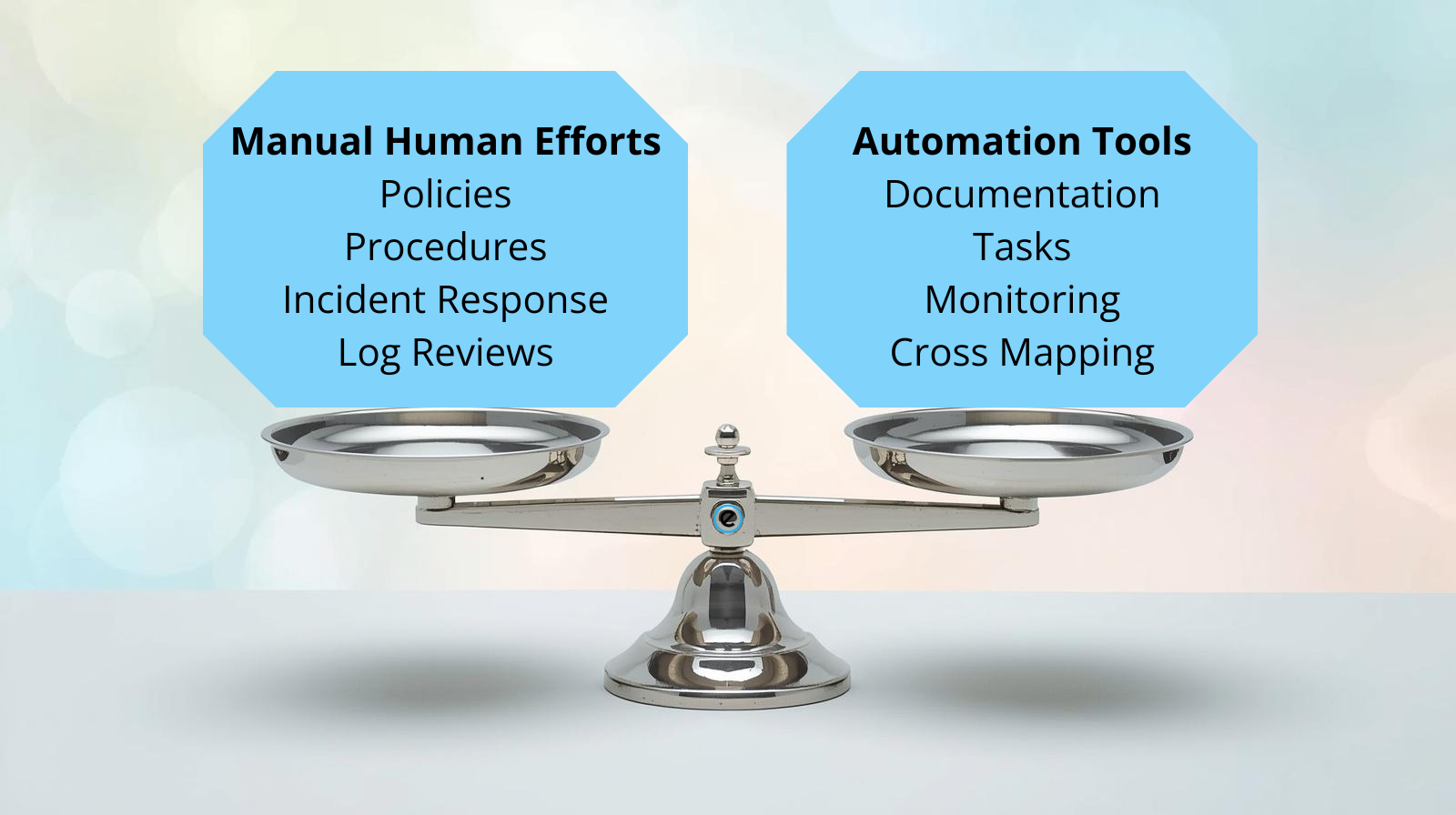
In reality, most organizations find that the best approach to CMMC compliance combines both manual and automated processes.
Policies and procedures often require human oversight. Security teams still need to review logs, respond to incidents, and ensure policies are followed across the organization.
At the same time, automated tools can simplify monitoring and documentation tasks that would otherwise consume significant time.
For companies preparing to meet CMMC Level 2 requirements, this balanced approach often provides the most reliable path toward certification and long term compliance.
Preparing for CMMC the Smart Way
Whether your organization relies more on manual processes or automated systems, preparation remains the most important factor in achieving CMMC compliance.
Organizations should begin by understanding exactly what CMMC Level 2 requirements demand. From there, companies can evaluate their existing security environment and determine where gaps exist.
Closing those gaps early reduces risk during the official assessment process and prevents unexpected remediation work later.
CMMC is quickly becoming a permanent part of the defense contracting landscape. Companies that invest the time to understand their compliance strategy now will be better positioned to maintain contracts and protect sensitive information in the future.