
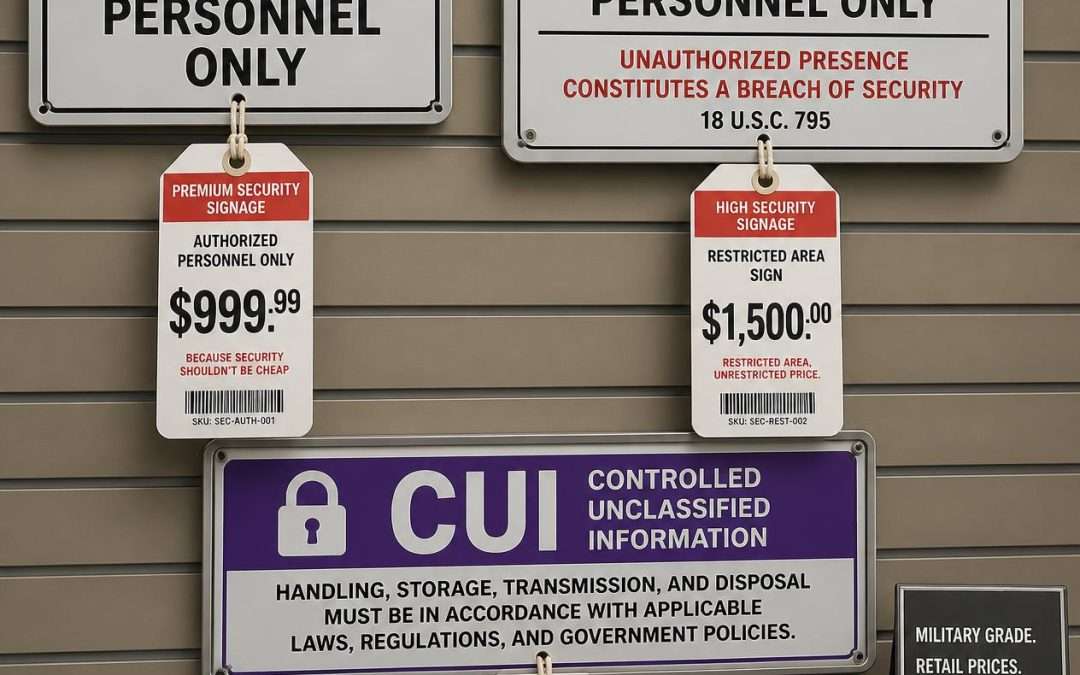
How Much Should CUI Signage Actually Cost?
If your organization is preparing for a CMMC audit, one of the first things you may notice is how expensive some compliance products and physical security solutions can become. From simple CUI door signs to complete physical security kits, many defense contractors are being quoted hundreds or even thousands of dollars for items that are often basic office supplies.
The truth is that CUI supplies do not need to be overpriced in order to help your company stay compliant. Understanding what is actually required for a successful CMMC audit can help your organization avoid unnecessary spending while still meeting the expectations of assessors and protecting Controlled Unclassified Information (CUI).
In this guide, we will break down what CUI signage is, why it matters during a CMMC audit, what companies are commonly overcharged for, and how to build an effective physical security environment without overspending.
What Is CUI Signage?
Controlled Unclassified Information, commonly referred to as CUI, is sensitive government information that requires safeguarding but is not classified. Companies within the Defense Industrial Base (DIB) that handle CUI must follow security practices outlined in NIST SP 800-171 and the CMMC framework.
One of the most overlooked parts of compliance preparation is physical security. While organizations often focus heavily on cybersecurity tools, assessors also evaluate how physical documents, offices, and restricted areas are protected.
This is where CUI supplies and signage become important.
Common examples include:
- CUI warning signs
- Visitor control signs
- Clean desk reminder posters
- Restricted access notices
- File cabinet labels
- Printer area notices
- Badge requirement signage
- Document destruction reminders
These supplies help reinforce security awareness and demonstrate that your organization takes the handling of CUI seriously during a CMMC audit.
Why Physical Security Matters During a CMMC Audit
A CMMC audit does not focus only on firewalls and software. Assessors also examine physical safeguards that help prevent unauthorized access to sensitive information.
During an assessment, auditors may review:
- Facility access controls
- Visitor management procedures
- Physical storage protections
- Employee awareness signage
- Printed document handling
- Secure work areas
- Physical media labeling
Organizations that fail to address physical security often create unnecessary findings during a CMMC audit, even if their cybersecurity controls are strong.
Proper CUI supplies help support compliance by making security procedures visible and understandable for employees, visitors, and auditors.
Why Are Some Companies Charging So Much for CUI Supplies?
One of the biggest frustrations for small and medium-sized defense contractors is discovering how expensive some “compliance kits” can be.
It is not uncommon to see vendors charging:
- Hundreds of dollars for simple signs
- Thousands for basic office labeling packages
- Premium pricing for downloadable PDFs
- High consulting fees tied to inexpensive materials
Many businesses assume these products are heavily regulated or require special government approval. In reality, most CUI signage is intended to support awareness and reinforce existing policies.
The value should come from:
- Clarity
- Professional presentation
- Consistency
- Ease of implementation
- Not inflated pricing.
While there are legitimate providers that offer quality CUI supplies and consulting services, companies should understand that effective compliance does not always require massive spending on signage alone.
What CUI Supplies Are Actually Necessary?
Every environment is different, but most organizations preparing for a CMMC audit benefit from a few core physical security items.
- CUI Area Signs
These signs identify locations where CUI is handled or stored. They help communicate that only authorized personnel should enter certain areas.
Examples include:
“Authorized Personnel Only”
“CUI Handling Area”
“Restricted Access”
These are among the most common and useful CUI supplies.
- Visitor Management Signs
Visitor control is an important part of physical security.
Signs may include:
Visitor check-in procedures
Escort requirements
Badge instructions
Restricted photography notices
These signs help demonstrate that your organization manages facility access appropriately during a CMMC audit.
- Clean Desk Policy Reminders
Printed documents containing CUI should not be left exposed in unsecured areas.
Simple reminder signs near workstations can reinforce:
Proper storage
Document shredding
End-of-day cleanup procedures
These are low-cost but highly effective CUI supplies.
- Secure Storage Labels
Locked cabinets and storage areas should be clearly identified when used for CUI materials.
This may include:
Cabinet labels
Storage instructions
Access limitation notices
These visual indicators help support consistent employee behavior.
- Printer and Media Handling Notices
Printers, copiers, and removable media stations can become compliance risks if employees are not careful.
Helpful signage may remind users to:
Retrieve printouts immediately
Avoid unauthorized duplication
Properly destroy unused documents
These are simple additions that can support CMMC audit readiness.
How Much Should CUI Signage Really Cost?
The answer depends on the complexity of your environment, but in most cases, companies should expect reasonable pricing for standard materials.
For example:
Item | Typical Fair Price Range |
Basic laminated CUI sign | $10–$40 |
Door access sign | $15–$50 |
Printable policy poster | Free–$25 |
Small office starter kit | $50–$250 |
Large facility package | Varies by scope |
If a vendor is charging thousands for a small collection of generic signs, it is worth asking:
What additional value is being provided?
Are custom policies included?
Is consulting bundled into the pricing?
Are the materials actually necessary?
Not every organization needs an expensive enterprise package to prepare for a CMMC audit.
The Biggest Mistake Companies Make During Compliance Preparation
Many organizations focus on buying products before understanding their actual compliance requirements.
This often leads to:
- Overspending
- Purchasing unnecessary CUI supplies
- Inconsistent implementations
- Confusion among employees
A better approach is to:
- Understand your environment
- Review your CMMC audit requirements
- Identify real physical security gaps
Purchase only the supplies that support those controls
Compliance should be intentional, not driven by fear-based sales tactics.
What Assessors Really Care About
When assessors evaluate physical security controls, they are generally looking for consistency and evidence.
They want to understand:
- Who has access to CUI?
- How is physical access controlled?
- What procedures are in place?
- Are employees trained?
- How are visitors managed?
- How is physical CUI stored and destroyed?
- Are controls actually being followed?
A clean and organized environment with clearly documented procedures often matters far more than expensive visual branding.
Assessors understand that different organizations have different operational realities. A 15-person machine shop will not be expected to implement the same physical security model as a major defense prime contractor.
Reasonable and repeatable controls are the objective.
Affordable Ways to Improve Physical Security
At Emgage, we have seen firsthand how many companies are being pushed toward unnecessary spending during CMMC preparation.
That is why we believe organizations should focus on practical security improvements instead of inflated compliance purchases.
To help companies get started, Emgage offers basic physical security signage for free to organizations preparing for CMMC compliance. This includes simple signage templates and materials designed to help companies clearly mark restricted areas and support basic physical protection requirements without adding unnecessary cost.
The goal is not to sell fear.
The goal is to help organizations build sustainable compliance programs that make operational and financial sense.
Train Employees Regularly
Even the best CUI supplies are ineffective if employees do not understand procedures.
Combine signage with:
- Security awareness training
- Clean desk policies
- Visitor procedures
- Media handling education
- Start With High-Risk Areas
Focus first on:
- Entry points
- Document storage
- Printing stations
- Shared workspaces
This creates immediate improvements before investing in larger upgrades.
What Auditors Actually Want to See
One important thing to understand about a CMMC audit is that assessors are evaluating whether your controls are:
- Implemented
- Consistent
- Understood
- Maintained
They are not grading your organization based on how expensive your signage is.
A simple, organized, well-documented environment is often more effective than an office filled with excessive or confusing signage.
Auditors typically want to see:
Effective CUI supplies support these goals, but they do not need to be extravagant.
Building a Sustainable Compliance Program
CMMC compliance is not a one-time event. Physical security should become part of your company culture rather than a rushed purchase before an assessment.
Organizations that succeed long-term typically:
Keep procedures simple
Use practical CUI supplies
Train employees consistently
Review policies regularly
Improve gradually over time
This creates a stronger foundation for future CMMC audits and ongoing contract eligibility.
Final Thoughts
Preparing for a CMMC audit can feel overwhelming, especially for smaller businesses entering the defense space for the first time. Between cybersecurity tools, consulting services, documentation requirements, and physical security upgrades, costs can add up quickly.
However, companies should remember that effective compliance does not require overspending on basic CUI supplies.
Need A CMMC CUI Kit?
Kickstart your compliance with our free Starter Pack CMMC CUI Kit. Get practical materials, labels, and signs to start handling CUI correctly and move toward CMMC compliance with confidence.