How Defense Contractors Should Destroy ITAR Documents

If you work in manufacturing or engineering within the defense supply chain, you probably handle a lot of sensitive information. That might include design drawings, build specifications, supplier agreements, or technical program data.
Many companies spend time securing their networks and computer systems, but one risk often gets overlooked: paper documents.
Printed drawings, production plans, and contract files can contain the same sensitive information that lives inside your digital systems. If those documents are thrown away without proper destruction, they can expose Controlled Unclassified Information (CUI) or export-controlled data.
For companies working with the Department of Defense, secure document destruction is part of maintaining CMMC compliance, ITAR and NIST 800-171 security requirements.

What Counts as CUI and Why Destruction Matters

Controlled Unclassified Information, commonly called CUI, includes sensitive government information that is not classified but still requires protection.
In manufacturing environments this can include:
Federal guidance makes it clear that CUI must be destroyed so the information cannot be read or reconstructed.
The rule comes from 32 CFR §2002.14, which is part of the government-wide CUI program. It states that CUI must be destroyed using methods that make the information unreadable and unrecoverable.
Another key reference is NIST SP 800-88 Revision 1, which provides federal guidance on media sanitization. While the document covers digital media, it also confirms that physical records containing sensitive information must be destroyed in a way that prevents reconstruction.
For most companies, this means using industrial cross-cut or micro-cut shredding, not standard office shredders.

ITAR Also Requires Secure Document Handling
Secured ITAR info
Many manufacturers in the defense supply chain also deal with ITAR controlled technical data.
ITAR stands for the International Traffic in Arms Regulations, which are enforced by the U.S. Department of State through the Directorate of Defense Trade Controls (DDTC).
These regulations are designed to prevent sensitive military technology from being accessed by unauthorized parties. That includes technical drawings, product specifications, and engineering data.
While ITAR does not list a specific shredding machine requirement, the rule is clear about one thing: companies must prevent unauthorized access to controlled technical data. If sensitive documents are thrown away without proper destruction, that could be considered a failure to safeguard export-controlled information.
For defense manufacturers, the safest approach is to use a secure document destruction process that includes documented handling and verified destruction.

How Secure Shredding Services Work

Itar Document Destroy
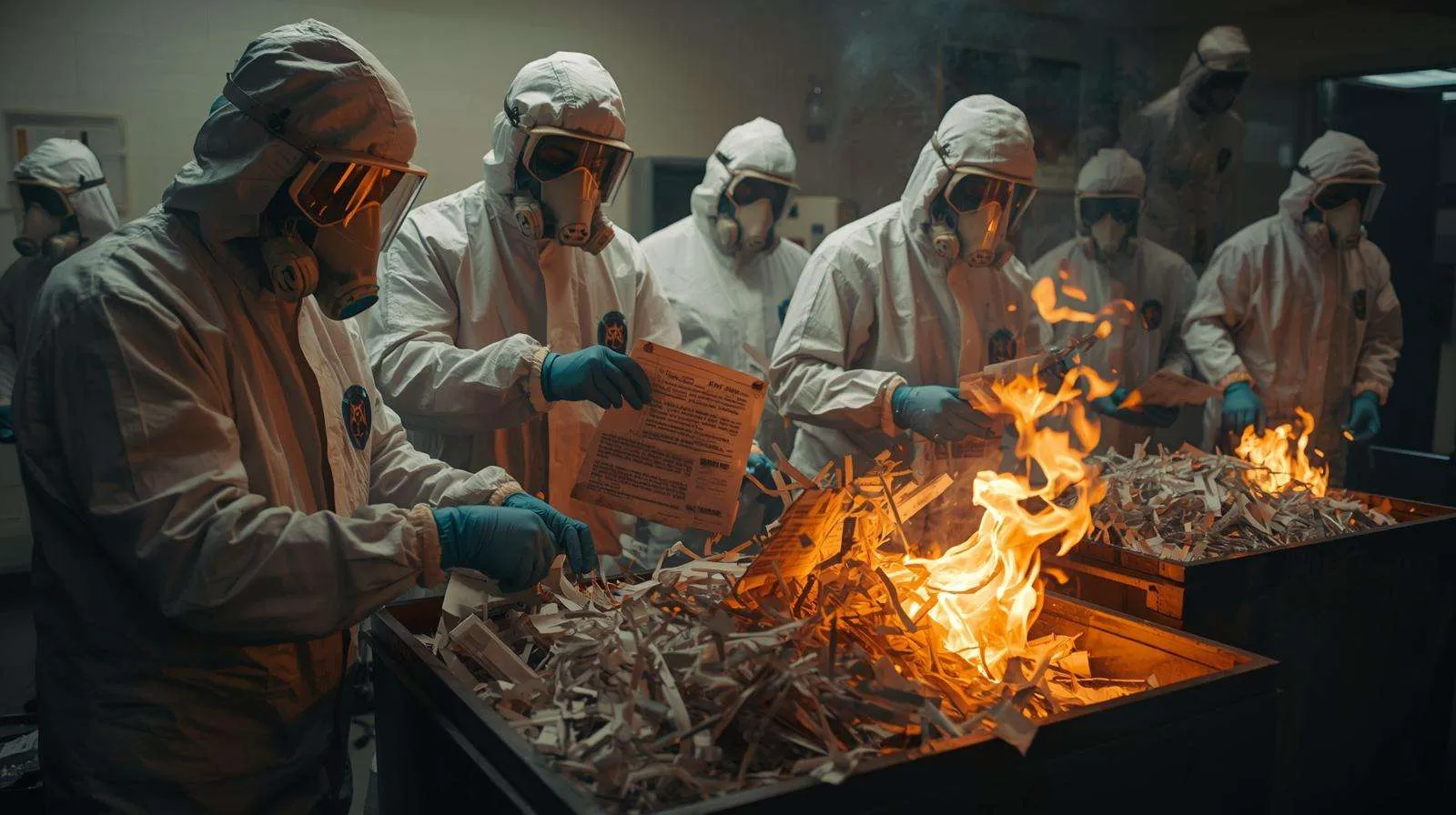
Many defense contractors rely on professional shredding providers to destroy sensitive records. These companies specialize in destroying documents using equipment that meets security expectations for regulated industries.
One common option is on-site shredding. In this case, a mobile shredding truck comes to the facility and destroys the documents immediately. This approach is popular because the records never leave the building intact.
Another approach is off-site industrial shredding. Documents are placed in locked containers and transported to a secure shredding facility. There they are destroyed using large industrial shredders that reduce paper into extremely small pieces.
Both methods are widely used by defense contractors, aerospace companies, and engineering firms that must protect sensitive information.

The Real Challenge Behind CMMC Level 2 Requirements

Many organizations underestimate how detailed CMMC Level 2 requirements actually are. The framework requires companies to implement more than one hundred security controls across areas such as access control, system monitoring, incident response, and configuration management.

Meeting those requirements involves more than installing a few security tools. Organizations must also prove that controls are documented, consistently applied, and monitored over time.

For companies relying entirely on manual processes, this level of tracking can become overwhelming. Security controls must be documented clearly and maintained consistently across the organization.

Automation can reduce some of that burden, but it still requires thoughtful planning and proper implementation, especially before a CMMC Assessment.

Why Chain of Custody and Documentation Matter
Itar Chain of custody
For companies working toward CMMC compliance, documentation matters just as much as the security process itself.
NIST 800-171 Control 3.8.3 requires organizations to sanitize or destroy media containing sensitive information before disposal or reuse. That includes paper records as well as digital storage devices.
Because of this requirement, companies should be able to show evidence that sensitive records were destroyed properly. Secure shredding providers usually supply a certificate of destruction, which confirms that the materials were destroyed according to their documented procedures.
These records can be helpful during internal reviews, CMMC assessments, or security audits.

Protecting the Defense Supply Chain

Cybersecurity requirements across the defense supply chain are increasing. Programs like CMMC are designed to ensure that contractors protect sensitive information wherever it exists.
That protection does not stop at computers and servers. It also applies to paper records, printed drawings, and archived documents.
Secure document destruction is the final step in protecting sensitive information. When done correctly, it helps manufacturers reduce risk, protect intellectual property, and maintain eligibility for defense contracts.
For companies handling CUI, ITAR technical data, or defense program documentation, a documented shredding process is a simple but important part of a strong security program and a good CMMC Assessment Guide.

FREE 15-Min Discovery

15 Minutes Can Save You 58% on CMMC. No Commitment. No Obligations. Learn How You Can Get To CMMC Without Overspending or Overcomplicating.

CMMC Done On Budget, On Time & On Your Terms

CMMC doesn’t have to be expensive or painful. We help DoD contractors reach compliance efficiently, affordably, and correctly.

For More Content

What Security Tools Will Be Required for FedRAMP 20x

Learn what security tools support FedRAMP 20x, including automation, evidence, monitoring, IAM, vulnerability, and readiness needs.

FedRAMP 20x Evidence Requirements Explained

Learn FedRAMP 20x evidence requirements, including machine-readable evidence, KSI validation, automation, and readiness steps for SaaS.

How to Prepare for FedRAMP 20x Certification

Learn how to prepare for FedRAMP 20x certification, build reusable evidence, address KSIs, and connect FedRAMP Moderate readiness to Class C.

Can Azure Help With FedRAMP and CMMC Compliance?

Learn how Azure and Azure Government can support FedRAMP and CMMC compliance, what they help with, and what your team still owns

Can FedRAMP 20x Help You Achieve CMMC Level 2?

Learn how FedRAMP 20x can support CMMC Level 2 readiness, where the frameworks overlap, and what gaps contractors still need to close.