
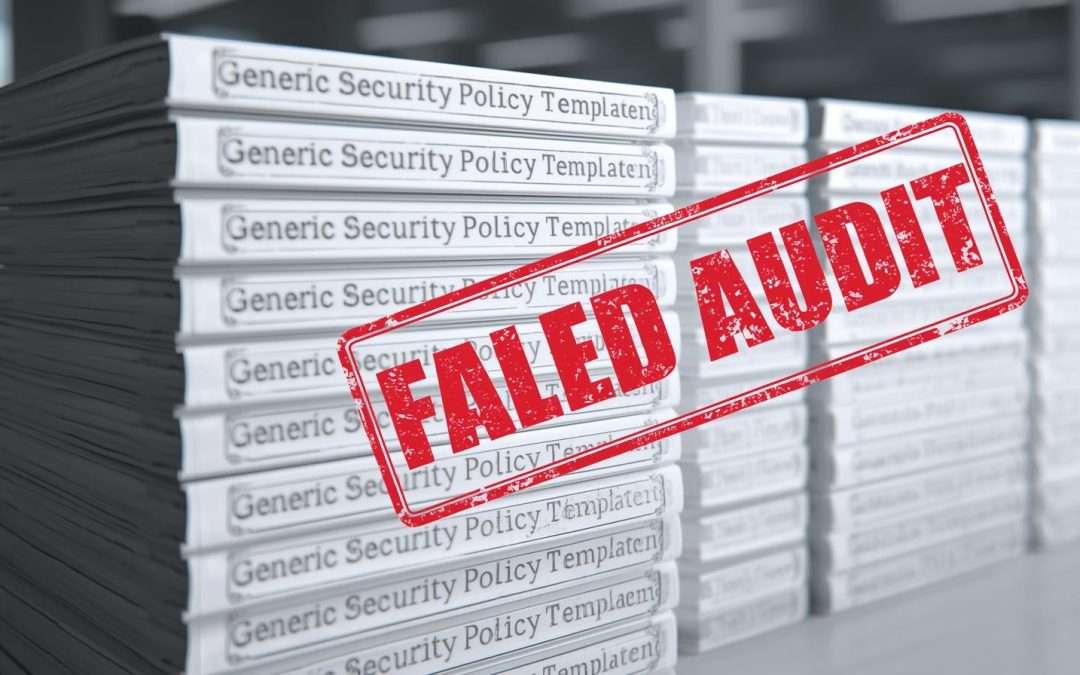
CMMC Policy Templates: Why Generic Templates Fail Audits
Many defense contractors begin their CMMC compliance journey by downloading a stack of policy templates from the internet. It feels like progress. Suddenly there is a folder full of documents labeled “Access Control Policy,” “Incident Response Plan,” and “Media Protection Policy.”
But here is the problem.
Most generic CMMC policy templates fail during a real CMMC assessment.
Auditors and assessors are not just checking whether a document exists. They are verifying whether the policy reflects how your organization actually operates. If your policies do not match your systems, processes, and employees, it quickly becomes obvious.
For manufacturers and small businesses in the Defense Industrial Base, understanding why templates fail is the first step toward building policies that actually support CMMC compliance and NIST 800-171 requirements.
Why CMMC Requires More Than Just Templates
The Cybersecurity Maturity Model Certification (CMMC) framework is built around demonstrating that security practices are truly implemented inside your company.
That means written policies must reflect real operational processes.
The foundation for many CMMC Level 2 requirements comes from NIST SP 800-171, which outlines security controls designed to protect Controlled Unclassified Information (CUI). These controls require organizations to establish policies that govern how systems are accessed, how incidents are handled, and how data is protected.
For example, NIST 800-171 Control 3.1.1 requires organizations to limit system access to authorized users. A policy template might say this is enforced, but during a CMMC assessment, the assessor will want to see proof. They will review your identity management practices, access control configurations, and onboarding procedures.
If your written policy says one thing but your systems show another, the gap becomes clear very quickly.
This is why policies built from a generic NIST 800-171 policy template often need significant customization before they are ready for an audit.
The Biggest Problems With Generic Policy Templates
Many companies assume policy templates are a shortcut to compliance. In reality, they often create additional work later when the organization prepares for a formal CMMC assessment.
The first problem is that most templates are written in extremely broad language. They are designed to apply to thousands of organizations, which means they rarely match the structure of a specific company.
The second issue is that templates often describe security controls that are not actually implemented. A policy might reference tools or procedures that your organization does not use. When assessors compare the written policy to the technical environment, the mismatch becomes obvious.
The third issue appears during documentation review. CMMC assessments evaluate whether policies, procedures, and evidence all support the same security practices. If policies were copied directly from a template without modification, they usually do not align with system configurations or operational workflows.
For many companies, this becomes one of the biggest stumbling blocks in achieving CMMC compliance.
Why Policies Must Reflect Your Actual Environment

Defense contractors vary widely in size, technology, and operational structure. A small machining company with thirty employees operates very differently from a large aerospace manufacturer.
Because of this, policies must reflect the real environment of the organization.
For example, a small manufacturer performing a CMMC Level 1 self assessment may only need policies that address the protection of Federal Contract Information (FCI). These policies should clearly explain how employees handle sensitive documents, how systems are accessed, and how basic cybersecurity practices are enforced.
Organizations working toward CMMC Level 2, however, must demonstrate protection of CUI using the full set of NIST 800-171 controls. Their policies need to cover areas such as incident response, configuration management, risk assessment, and media protection.
In both cases, the policy documents must clearly describe the systems, processes, and responsibilities that exist inside the company.
What Assessors Look for During a CMMC Assessment
When an organization undergoes a formal CMMC assessment, assessors evaluate more than just documentation. They are looking for consistency across three areas: written policies, operational procedures, and real-world implementation.
Policies explain the organization’s security expectations. Procedures describe how those policies are carried out. Evidence demonstrates that the procedures are actually happening.
For example, if a policy states that employees complete annual security awareness training, assessors will likely request training records. If a policy describes access control enforcement, assessors may review user account permissions or system logs.
This is why strong CMMC policy templates are not simply documents filled with generic language. They must clearly connect to how the organization operates.
Building Policies That Support Real CMMC Compliance
Templates can still be useful. They provide a structure and help organizations understand which policy areas need to exist. But they should be treated as a starting point rather than a finished product.
Effective policies usually go through several stages. The organization begins with a template, then adjusts the language to reflect its systems, processes, and personnel responsibilities. Technical teams verify that the policy accurately describes the environment, and leadership approves the final document.
When done correctly, the policies become more than compliance paperwork. They become a roadmap for how the organization protects sensitive information.
For defense contractors handling CUI, this level of clarity is essential for maintaining both regulatory compliance and contract eligibility.
Why Policy Quality Directly Impacts CMMC Compliance
Many companies underestimate how important policies are in the overall CMMC compliance process. Strong policies help employees understand security expectations, guide technical implementations, and provide the documentation needed during assessments.
Weak policies do the opposite. They create confusion, introduce inconsistencies, and raise questions during an audit.
Organizations that invest time in building accurate and customized CMMC policy templates typically move through the assessment process much more smoothly. Their documentation aligns with their systems, their procedures support the written policies, and assessors can clearly see how security practices are implemented.
For manufacturers and contractors in the defense supply chain, that alignment can make the difference between a smooth certification process and a costly remediation effort.
The Bottom Line
Generic templates can help you get started, but they rarely hold up during a real CMMC assessment.
Policies must describe how your company actually protects sensitive information. They must align with NIST 800-171 controls, support your CMMC compliance checklist, and reflect the systems and processes used by your team every day.
For companies working toward CMMC Level 1 or Level 2, taking the time to build accurate and tailored policies is one of the most important steps in preparing for certification.
When policies match reality, assessments become much easier and compliance becomes much more sustainable.